Search
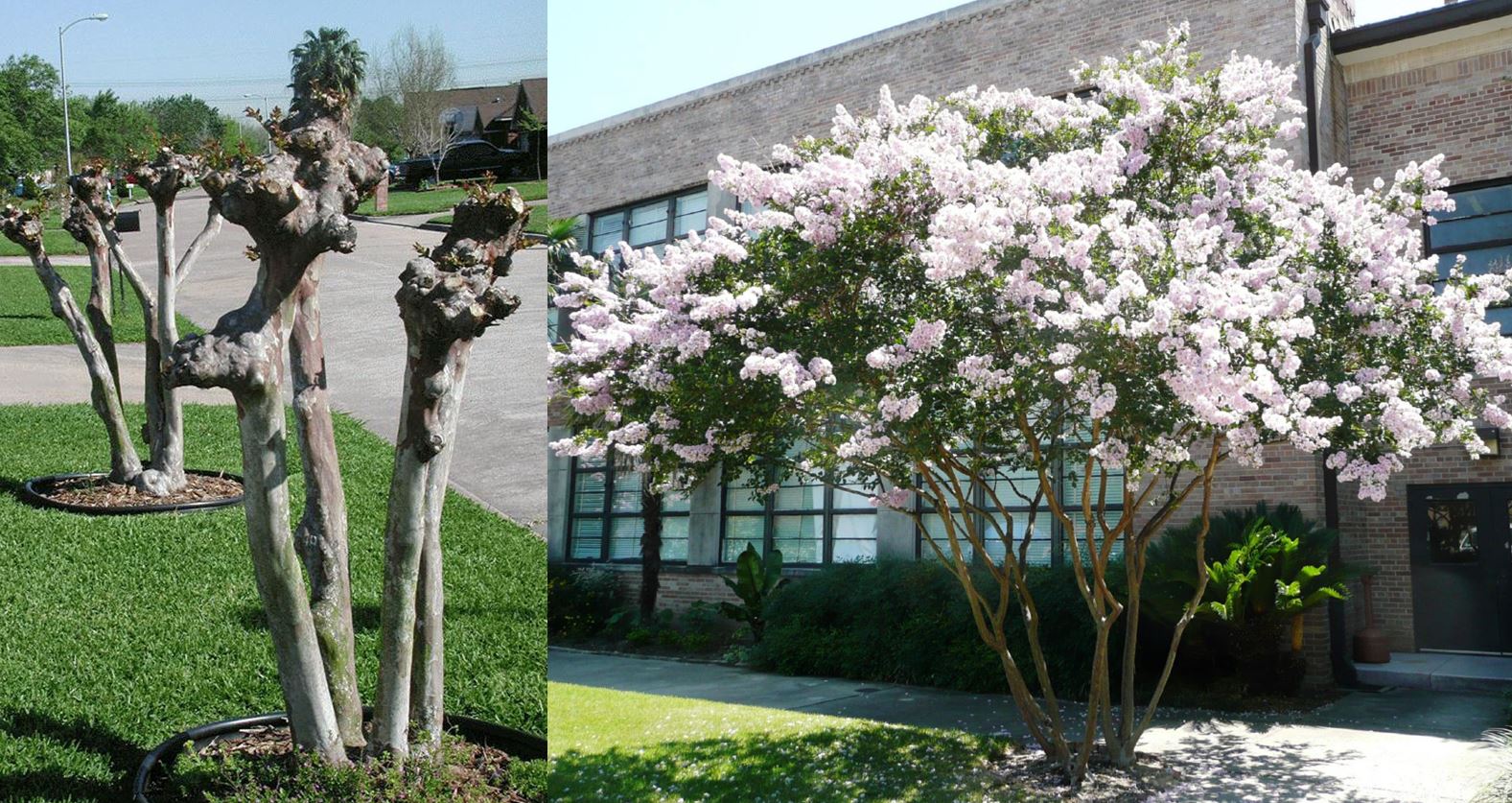
Crape "Murder" – Official Definition
"Crape murder" refers to the hidious, mind-numbingly ignorant act of chopping crape myrtles into ugly stumps every winter in the disconjointed belief that this improves them.
Unnecessary butchering.
The who, when, where, how...but, more importantly, why about pruning and caring for crape myrtles by Allen Owings of the LSU AgCenter.
The educated and uneducated.
Males and females.
Home gardeners.
Master Gardeners.
Landscape professionals.
More Crape Myrtles pruned incorrectly than Crape Myrtles pruned correctly.
30 years ago nobody pruned a Crape Myrtle.
Typically winter.
Trending towards fall.
Anytime of the year is Crape murder time.
High cuts (head or ladder), medium cuts (chest, waist), low cuts (knee, ankles).
"Down to the Ground" cuts.
Commercial landscapes.
Urban street plantings.
Rural highways.
Residential landscapes.
Subdivision/residential community entrances.
Chain saws – dull blade preferable.
Small, medium and large loopers.
Gas powered edge trimmers.
Three point hitch mowers/tractors.
Hand pruners that break when cuts/twists are made to complete the act.
Cut at Same point each year.
Cut at different point each year.
"Need to charge for work in the winter time."
"Crape myrtles will flower better."
"My crape myrtle is too large for the space it is planted."
"My neighbor pruned his trees." (aka copy cat criminal act)
"My husband / wife made me do it."
"It is time to prune."
"My client told me to prune his crape myrtles."
"We want to win the Southern Living magazine crape murder photo contest."
Wood decaying fungus.
Delay first flowering in spring.
More prone to suckering.
More prone to watersprout development.
Large flower heads but fewer overall flowers.
Ruins long term appeal of exfoliating bark.
Late fall through winter.
3, 5, 7 main trunks
Standard crape myrtle – single trunk.
Thinning interior branches.
Remove any watersprout growth in canopy.
Prune to enhance exfoliating bark characteristics.
Encourages stronger tree.
Encourages more flowers and better flower distribution.
Remove suckers at base (physical method).
"Raise" canopy but do not lion’s tail the plant.
Lower canopy (trunk) 33-40%, upper canopy (foliage, flowers) 60-67%.
No need to prune off seed pods.
No need to deadhead.
Please click on the links below for more information about gardening and gardening-related topics.
Go to Urban Extension Home Page